Home

Welcome to the School of Earth and Atmospheric Sciences at Georgia Tech!

Explore our website to discover more about our graduate and undergraduate programs, research, and upcoming events and news.
Spark: College of Sciences at Georgia Tech

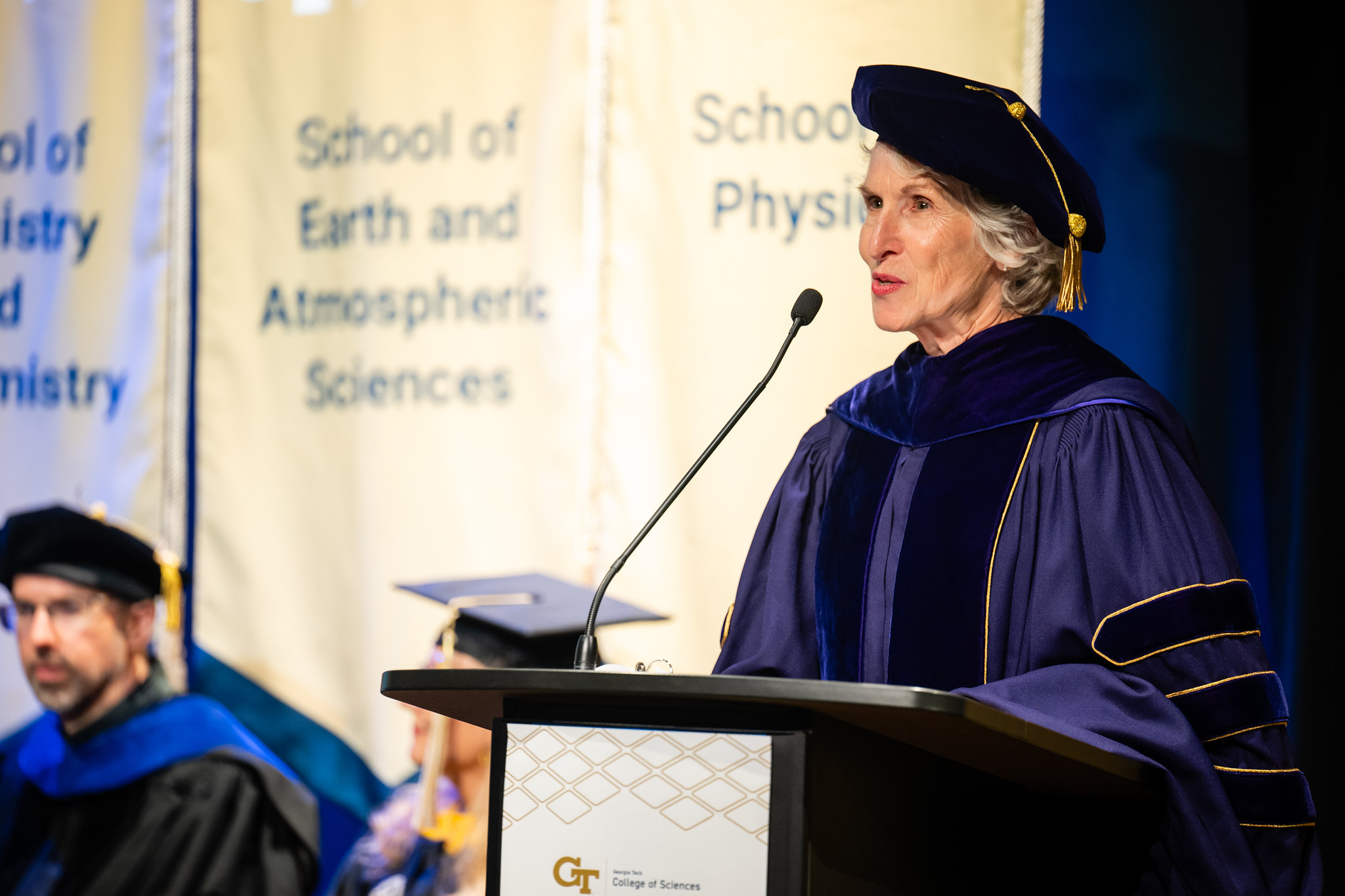
Welcome to the College of Sciences at Georgia Institute of Technology — we're so glad you're here. Learn more about us in this video, narrated by Susan Lozier, Dean and Betsy Middleton and John Clark Sutherland Chair in the College and President of AGU, and at: cos.gatech.edu

Recent News

Researchers launch a a lightweight, balloon-borne instrument to collect data. "To keep advancing, we need scientists who can determine what data we need, collect that data, and solve problems," Bracco says. (NOAA)

A Georgia Tech-led review paper recently published in Nature Reviews Physics is exploring the ways machine learning is revolutionizing the field of climate physics — and the role human scientists might play.


 The global ocean’s surface temperature was still well above average going into 2025. Meaghan Skinner Photography/Moment via Getty Images

In fact, every decade since 1984, when satellite recordkeeping of ocean temperatures started, has been warmer than the previous one.


donglai-yang.jpg

Donglai Yang, a second-year PhD student in geophysics, was selected as one of two recipients of the 2025 iHARP Polar Informatics graduate fellowship.


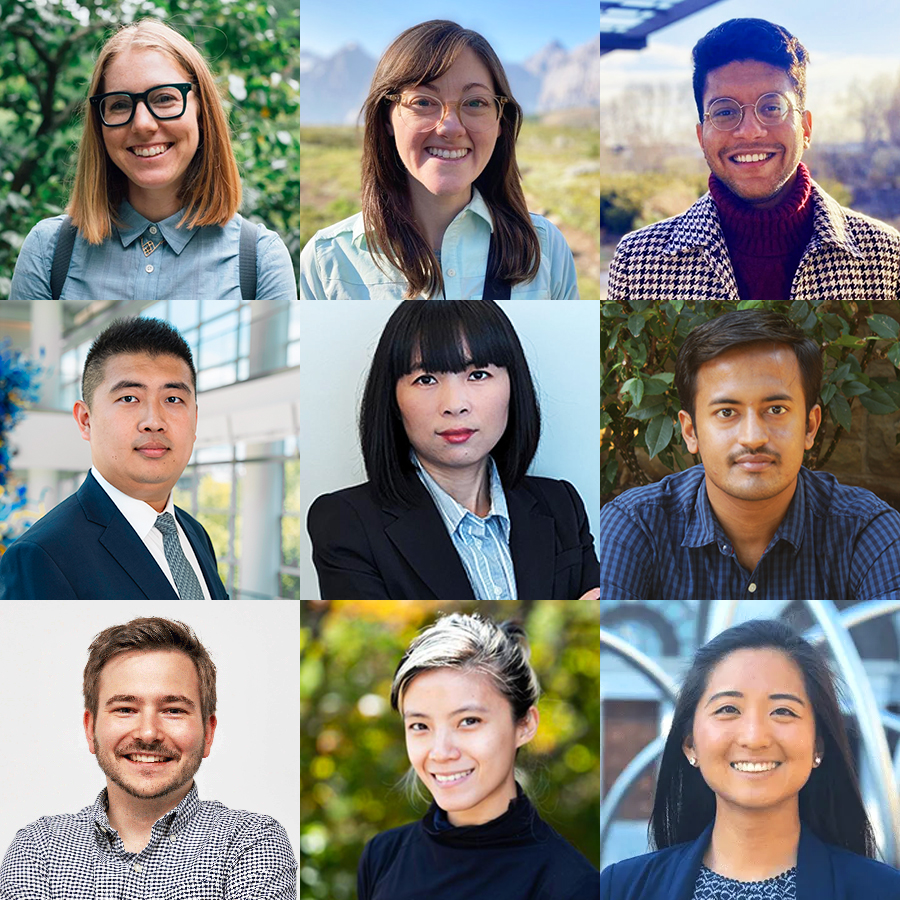
Members of the College of Sciences Young Alumni Board. (Sid Suratia)

The College of Sciences launched its Young Alumni Board, a volunteer-based leadership group that is tasked with deepening the relationship between recent Yellow Jacket graduates and the College. The inaugural Board consists of 13 members who obtained an u


Upcoming Events

Seminars are held on Thursdays from 11:00 AM-12:00 PM (except where noted) virtually or in the Charles H. Jones Auditorium (L1205) in the Ford ES&T Building. For more information, please contact the Main Office at (404) 894-3893 or the speaker host (listed below).

Organizers: Ali Sarhadi, Shi Sim, and Nisaa Buchanan

Feb
06
2025

Global Cycling of Persistent Pollutants: Influence of Climate Change and Impact on Human Health

Feb
07
2025

Come join the Spatial Ecology and Paleontology Lab every Friday for Fossil Fridays! Become a fossil hunter and help discover how vertebrate communities have changed through time.

Feb
14
2025

Come join the Spatial Ecology and Paleontology Lab every Friday for Fossil Fridays! Become a fossil hunter and help discover how vertebrate communities have changed through time.

Feb
21
2025

Come join the Spatial Ecology and Paleontology Lab every Friday for Fossil Fridays! Become a fossil hunter and help discover how vertebrate communities have changed through time.

Feb
26
2025

This event is designed to help students unlock meaningful undergraduate research opportunities.

Experts in the News

Wildfires are becoming a bigger focus for scientists that study air pollution, said Nga Lee (Sally) Ng, professor in the School of Earth and Atmospheric Sciences. Ng is also the principal investigator of ASCENT, a new federally funded, national monitoring network that began last year to measure a wide range of air pollutants in real time. The readings from the Los Angeles area fires were captured at the network’s monitoring station in Pico Rivera, several miles from the active fires.

The New York Times

January 20, 2025

In this piece, Zachary Handlos, senior academic professional in the School of Earth and Atmospheric Sciences, explains the work of climatologists, stating that “climatologists can take on a lot of roles. It’s important to understand the difference between weather and climate. So weather is the study of what's going on in the atmosphere right now. Climatology looks at data for a certain day and compares it to what’s called a climate normal. What this means is, they take a 30-year period of data for that day, and from that baseline, say, ‘Oh, the temperature today is above average or below average.'”

Augusta Chronicle

January 16, 2025

agu logo